Titel: Breaking Out of Its Niche: Safflower Cultivation
Abstract:
Safflower (Carthamus tinctorius L.) has long been considered a minor crop. However, its tolerance to drought and heat, deep root system and long flowering period make it a promising candidate for farming systems that are resilient to climate change and enhance biodiversity. Within the CarthBreed project, our aim is to 'break safflower out of its niche' by developing improved, regionally adapted cultivars and exploiting its genetic diversity for key traits relevant to diversified cropping. Using a wide range of genetic resources, we are characterising variations in stress tolerance, flowering phenology, plant architecture, spininess and seed quality (oil and protein) and linking these traits to performance in farmers' fields. Multi-environment field trials and quantitative genetic approaches are used to identify ideotypes suited for integration into crop rotations. Particular emphasis is placed on selecting types that are less spiny, have a high yield and stable performance under water limitation, and have oil and protein profiles that are suited to food and feed uses. By combining breeding and molecular information, CarthBreed seeks to provide a new generation of safflower cultivars that will contribute to agricultural diversification and on-farm biodiversity. The project also aims to establish safflower as a model species for breeding 'new' crops for sustainable agroecosystems.

Biography:
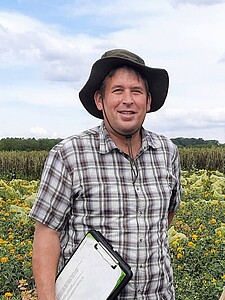
Hans Peter Maurer studied Agricultural Biology at the University of Hohenheim. He obtained his PhD at the Chair of Applied Genetics and Plant Breeding at the University of Hohenheim under the supervision of Prof. Dr. A. E. Melchinger. Since November 2007, he has been a research scientist at the State Plant Breeding Institute (Landessaatzuchtanstalt), University of Hohenheim. He leads the triticale breeding program and, since 2020, has also been responsible for breeding programs in safflower and lentil. His work focuses on the genetic improvement of crops for diversified and sustainable farming systems and on integrating modern breeding approaches into applied cultivar development.