Titel: From Field to Plate: Enhancing Biodiversity Through Buckwheat Breeding
Abstract:
Buckwheat (Fagopyrum esculentum) is a melliferous crop that flowers for a long period in the summer, when nectar in agricultural landscapes is generally scarce. The introduction of buckwheat into crop rotations could help fill an important nectar gap, which could potentially support wild pollinator populations in the long term.
However, planting buckwheat is only economically viable for a farmer if the yield, or more importantly the profit, is comparable to other crops. In our experiments, yields varied significantly from less than 1 t/ha to as high as 4 t/ha, depending on the year, location, and variety when sown as a main crop. Often, buckwheat is sown as a second crop and can achieve yields of up to 3 t/ha, which makes it an attractive option, especially as buckwheat germinates quickly while requiring very little water. Through its role as a flowering cover or second crop, buckwheat can enhance biodiversity in the field. Developing stable, high-yielding varieties through targeted breeding is therefore crucial for its widespread adoption.
Furthermore, buckwheat offers significant nutritional value: it contains all essential amino acids, making it a complete protein. It is an excellent source of minerals like magnesium, manganese, phosphorus, and copper, and provides a range of B vitamins. Additionally, buckwheat is high in dietary fiber and has a low glycemic index, making it beneficial for managing blood sugar. Its antioxidant compounds, such as rutin and quercetin, help protect the body from oxidative stress and inflammation.
Finally, and most importantly, buckwheat tastes really good and, thanks to its nutty, earthy flavor is suitable for a wide variety of dishes, thus helping to increase biodiversity on the plate.
Biography:
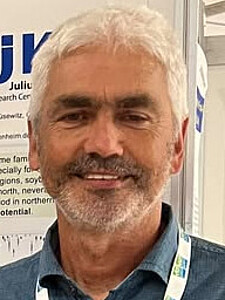
Dr. Volker Hahn studied agriculture at Justus Liebig University of Gießen, earning his PhD with a thesis on cytoplasmic male sterility in sunflower. He moved to the State Plant Breeding Institute at the University of Hohenheim in 1993, where he led the sunflower department. Since 2008, his work has focused on soybean breeding, and has recently expanded to include chia and buckwheat.Dr. Volker Hahn studied agriculture at Justus Liebig University of Gießen, earning his PhD with a thesis on cytoplasmic male sterility in sunflower. He moved to the State Plant Breeding Institute at the University of Hohenheim in 1993, where he led the sunflower department. Since 2008, his work has focused on soybean breeding, and has recently expanded to include chia and buckwheat.